Wednesday, March 13, 2013

European/American modernist design + the New York School


Although American modernist design originated in European modernist design, it quickly developed a uniquely American approach. What are the differences between European and American modernist design, as represented by the so-called New York School, including the influences of American culture and society? Identify designers of the New York School who introduced unique approaches to modernist design, and cite specific examples of their work (URLs) that aren’t found in Meggs’s A History of Graphic Design to support your discussion.

A few designs reflective of the period to offer you some inspiration:


New York School Innovators

Paul Rand was an American graphic designer, best known for his corporate logo designs, including the logos for IBM, UPS, Enron, Westinghouse, ABC, and NeXT.


Saul Bass was an American graphic designer and filmmaker, perhaps best known for his design of film posters and motion picture title sequences.


George Lois is an American art director, designer and author. Lois is perhaps best known for the covers he designed for Esquire magazine from 1962 to 1972.


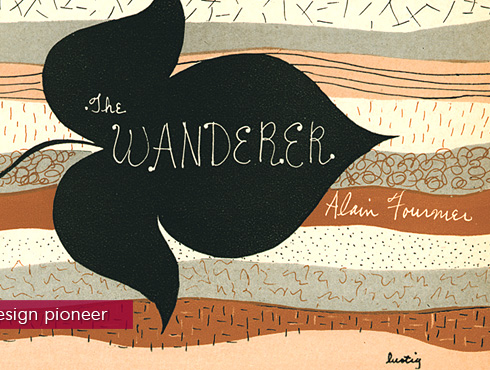
Alvin Lustig was an American book designer, graphic designer and typeface designer. He studied at Los Angeles City College, Art Center, and independently with Frank Lloyd Wright and Jean Charlot. He began designing for books in 1937.


Wednesday, March 6, 2013

Josef Müller-Brockmann and the the golden mean


In his 1960 exhibition poster entitled “Der Film,” Josef Müller-Brockmann designed to a grid based on the mathematical proportions of the golden mean. Explain the golden mean and how it is applied in this work. Include in your post an explanation of how the structure and typographic design effectively communicate meaning. Discuss and provide links to additional Müller-Brockmann examples and also locate contemporary design examples inspired by his work and the golden mean. 

P.S. creativebloq.com does a sweet job explaining and offering visual examples of the Golden Ratio. Check it here >


Additional Müller-Brockmann examples for inspiration: 


Contemporary examples inspired by Müller-Brockmann and the golden mean:
Müller-Brockmann's quote and cited contemporary examples can be found at: nomadcreatives.com/wp-content/uploads/2012/05/Muller-Brockman.pdf


Wednesday, February 20, 2013

Government-sponsored programs, modernism and American graphic design

Corporate leadership and government-sponsored programs helped usher modernism into American graphic design during the first half of the twentieth century. Discuss how government-sponsored programs (specifically, the Rural Electrification Administration, the Federal Art Project of the Works Progress Administration and the U. S. Office of War Information) helped usher modernism into American graphic design. Identify designers and links to examples of their work that aren’t found in Meggs’s A History of Graphic Design in your post.

Keeping up with science (LOC) Weisberg, Shari,, artist. Keeping up with science Illinois : Federal Art Project, WPA, [between 1936 and 1939]

See America. Welcome to Montana. Richard Halls Designer Works Progress Administration, Federal Art Project, NYC Maker United States Travel Bureau, Washington, D.C. Commissioner

No enemy sub will dare lift its eye if you lend your Zeiss or Bausch & Lomb bino culars to the Navy : pack carefully, include your name and address : send to Naval Observatory Washington D.C. [between 1941 and 1943]. Library of Congress Prints and Photographs Division. Reproduction Number: LC-USZC2-5161.

Keep mum - the world has ears / Grigware. Edward T. Grigware. [between 1941 and 1943]. Library of Congress Prints and Photographs Division. Reproduction Number: LC-USZC2-5554.

New Deal WPA poster - Federal Art Project

East side, West side exhibition of photographs. Anthony Velonis. 1938. Library of Congress Prints and Photographs Division. Reproduction Number: LC-USZC4-6179.

Cellar ceilings must be fire-retarded : Keep cellars clean / MW [monogram]. Martin Weitzman. [1936 or 1937]. Library of Congress Prints and Photographs Division. Reproduction Number: LC-USZC2-5397.

Rural Electrification Administration Advertisement Source: NRECA

Design for Container Corporation of America. Egber Jacobson 
Design for Container Corporation of America. Egber Jacobson

Design for Container Corporation of America. Cassandre

Wednesday, February 13, 2013

Jan Tschichold and the new typography

The essence of the new typography “was clarity, not simply beauty; its objective was to develop form from the functions of the texts” and emphasized “rational design planned for communicative function.” Discuss Jan Tschichold’s background and role in the spread of the new typography. Include at least three links to examples of his work that aren’t found in Meggs’s A History of Graphic Design to support your discussion.

Wednesday, February 6, 2013

de Stijl!

What are the underlying philosophies and characteristic elements of the de Stijl style? How are these principles applied when creating de Stijl inspired visual communications? Include in your answer specific names of designers and links to their work.

Wednesday, January 30, 2013

Cubism, A. M. Cassandre and Joseph Binder


Discuss the influence of cubism on the work of A. M. Cassandre and Joseph Binder. Locate and include links to specific examples of their work that aren’t found in Meggs’s A History of Graphic Design and include examples of lettering and type design.


Amelia asked me to share a CD cover she discovered (top image) that is relevant to our blog discussion. It's an example of A.M. Cassandre influencing a contemporary design. In researching the album Amelia found I actually stumbled upon another one too (bottom image)! Both David Guetta album designs are derived from deconstructing type similar to Cassandre's 1929 "Bifur Typeface."


Wednesday, January 23, 2013

We design in response to things that are happening around us.


Designers are social commentators of their time. We design in response to things that are happening around us. Throughout history technological advancements have pushed design into uncharted areas. What parallels can you make between the technology explosion of the early 1900s and the technology explosion that is happening today? How did it affect those designing at the turn of the century, and how does technology affect designers today?